
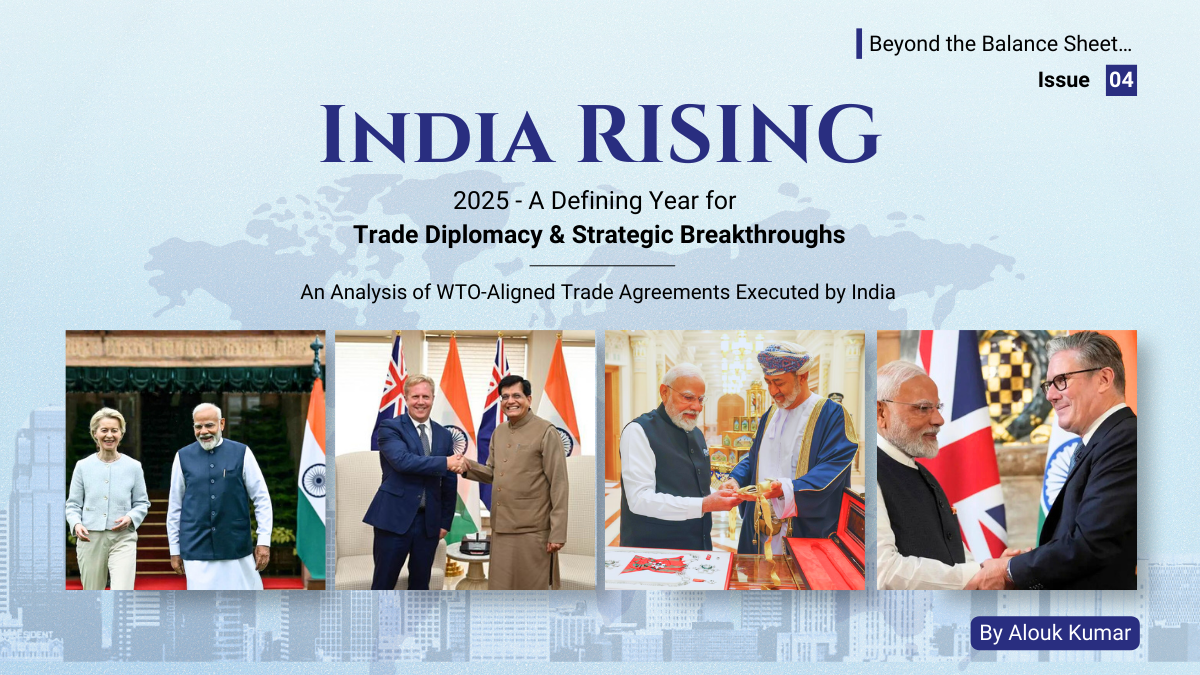
In a year marked by rising protectionism and geopolitical turbulence, 2025 emerged as a defining year for India’s trade diplomacy. New free trade and economic partnership agreements, often referred to collectively as WTO-aligned Trade Agreements (WTAs), expanded India’s global economic footprint and recalibrated its socio-economic and geopolitical trajectory.
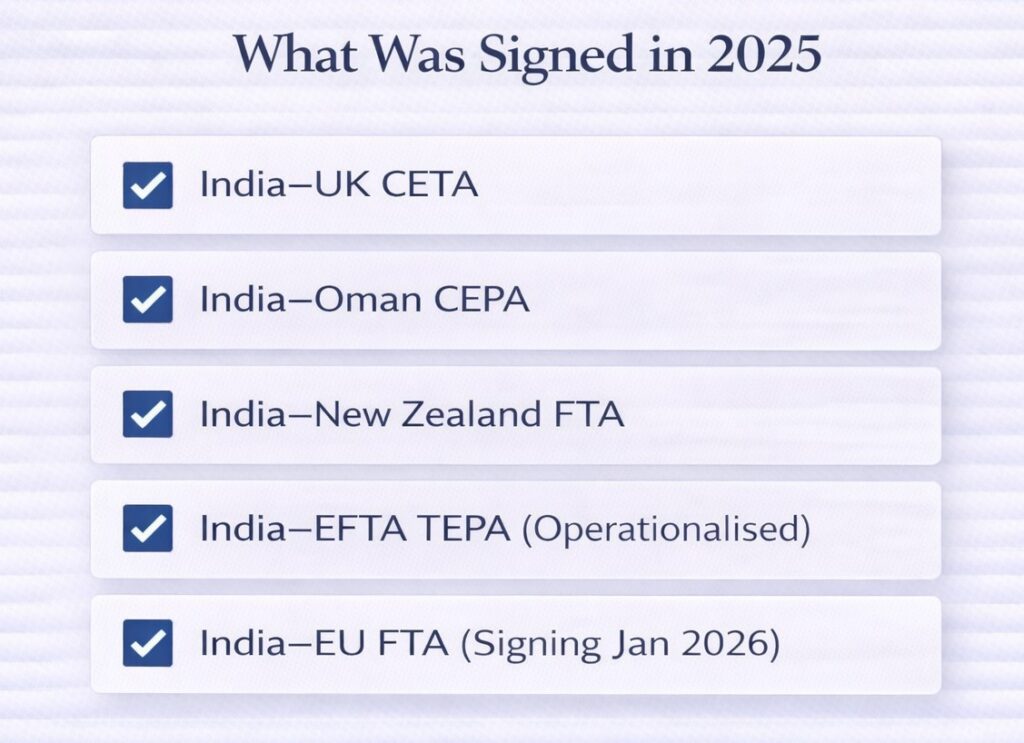
By concluding major pacts with key partners such as the United Kingdom, Oman, New Zealand, and the EFTA bloc (Switzerland, Norway, Iceland, Liechtenstein), including the Trade Deal with the ‘European Union’ to be executed on 27th January 2026. With all these deals & pacts, India has signalled a more assertive strategy to diversify markets, enhance global supply-chain integration, and leverage trade as an instrument of global influence. These accords promise to reshape India’s growth story, amplify employment, and fortify its diplomatic leverage in a polarised world.
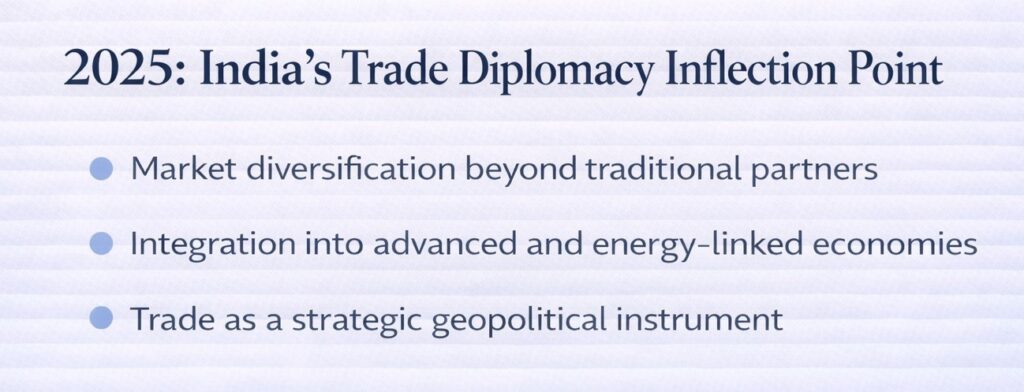
This comprehensive analysis examines the major WTAs India signed in 2025, their likely impact on India’s socio-economic landscape, and the broader geopolitical implications.
The 2025 WTA Landscape: Key Agreements Signed
India-United Kingdom (UK) Comprehensive Economic and Trade Agreement (CETA)
Perhaps the most high-profile trade agreement of the year was the India-UK Comprehensive Economic and Trade Agreement (CETA), signed on 24 July 2025.
This pact reduces or eliminates tariffs on almost all goods traded between the two countries, covering up to 99% of India’s exports by value. The agreement extends beyond goods to cover services and professional mobility provisions, which are significant given India’s comparative advantages in IT, healthcare, and business services.
Under CETA, Indian firms exporting textiles, leather, gems and jewellery, auto-components, and engineering products gain preferential access to the UK market, one of the world’s leading economies. The agreement also includes provisions on double social security contribution avoidance, which can reduce operating costs for Indian professionals and businesses operating in the UK.
Economic analysts estimate this agreement could expand bilateral trade by billions annually and attract fresh capital flows between India and the UK. Early projections suggest enhanced investor confidenceand deeper integration of Indian firms into UK supply chains.
Comprehensive Economic Partnership Agreement with Oman (CEPA)
On 18 December 2025, India and Oman finalised a Comprehensive Economic Partnership Agreement (CEPA) that goes far beyond simple tariff reduction. Under this pact, Oman granted zero-duty access to 98.08% of its tariff lines, effectively covering roughly 99% of India’s export value. At the same time, India reciprocated by liberalising tariffs on a significant portion of Omani imports.
This agreement came at a pivotal time as India seeks a greater foothold in the Gulf Cooperation Council (GCC) region, which for decades has been a major source of energy imports and remittances from a large Indian diaspora. CEPA’s provisions also include facilitation of skilled mobility, expansion of service trade, and greater investment protections—elements designed to strengthen bilateral economic integration.
India-New Zealand Free Trade Agreement (FTA)
Late in December 2025, India also concluded a comprehensive free trade agreement with New Zealand. While smaller in total trade volume compared to the UK or GCC markets, this pact nonetheless offers zero-duty access for 100% of India’s exports, with India offering reciprocal tariff concessions on a majority of New Zealand goods while protecting sensitive categories like dairy and wine.
Crucially, the agreement also includes service mobility provisions and expanded market access for professional services, reflecting India’s strategic push into advanced markets and knowledge-economy sectors.
India-EFTA Trade and Economic Partnership Agreement (TEPA)
Although signed in March 2024, the India-EFTA TEPA with Switzerland, Norway, Iceland, and Liechtenstein came into force on 1 October 2025, making it operational this year. This pact represents India’s first FTA with advanced European economies outside the European Union and includes an unprecedented $100 billion investment commitmenttied to market access and job creation over 15 years.
Under TEPA, nearly all Indian exports to the EFTA region will receive reduced or zero tariffs, with phased market access for sensitive products. This is coupled with expanded provisions for trade in services, professional mobility, and investment facilitation.
India and European Union (EU) Trade Deal & Agreement
A pact that analysts are already calling one of the most consequential deals of the century, impacting 2 billion People and a Quarter of the World’s Economic Output.
Leaders from both sides heralded the agreement as a transformative step forward in bilateral economic cooperation, signalling a major shift in global economic dynamics and opening a new chapter in India-EU relations.
This landmark accord, concluded after years of negotiations, will be inked during the India-EU Summit in New Delhi on January 27, 2026, underscoring both sides’ commitment to deeper economic integration and strategic partnership. While detailed legal clearances and ratification processes are underway, political leaders on both sides believe the deal will be implemented fully by late 2026.
Negotiations for a comprehensive trade agreement between India and the EU date back nearly two decades. Talks were revived in 2021 after a prolonged stalemate, and since then, both sides worked through complex issues, including tariffs, regulatory barriers, services trade, investment protections, and sustainable development provisions. The conclusion of this agreement is widely viewed as a testament to sustained diplomatic effort and shared economic vision.
European Commission President Ursula von der Leyen described the pact as “historic,” emphasising that it brings together markets representing nearly 2 billion people and a quarter of the world’s economic output,”presenting expansive opportunities for businesses and consumers alike.
At its core, the India-EU Free Trade Agreement aims to remove or significantly reduce tariffs on goods, streamline regulatory cooperation, and enhance market access for services and investment across key sectors. Covered areas include:
- Trade in goods: Reduction or elimination of tariffs on a wide range of industrial and consumer products, including machinery, electronics, textiles, and pharmaceuticals.
- Services: Enhanced access for Indian services, particularly in the fields of IT, telecommunications, business services, and transport, into EU markets.
- Investment and intellectual property protections: Robust legal frameworks to safeguard EU and Indian investments and promote technology cooperation.
- Dispute resolution and enforceable commitments: Clear mechanisms to resolve trade or regulatory disputes predictably and transparently.
- Sustainable development: Commitments to environmentally sustainable and socially responsible trade practices.
Agriculture, historically a contentious area, remains largely excluded from the initial phase of liberalisation owing to domestic sensitivities, particularly in India, where a significant portion of the workforce is engaged in farming.
India-EU Trade Deal: Benefits for India
For India, this agreement is more than just enhanced market access; it represents a strategic thrust toward integration with global value chains and diversification of export destinations.
Boost to Exports and Jobs: India’s exports to the EU stood at over USD 75 billion in goods and USD 30 billion in services in 2024-25. Reductions in tariffs and aligned regulations under the FTA are expected to make Indian products, especially labour-intensive ones such as textiles, garments, leather, and pharmaceuticals, much more competitive in European markets.
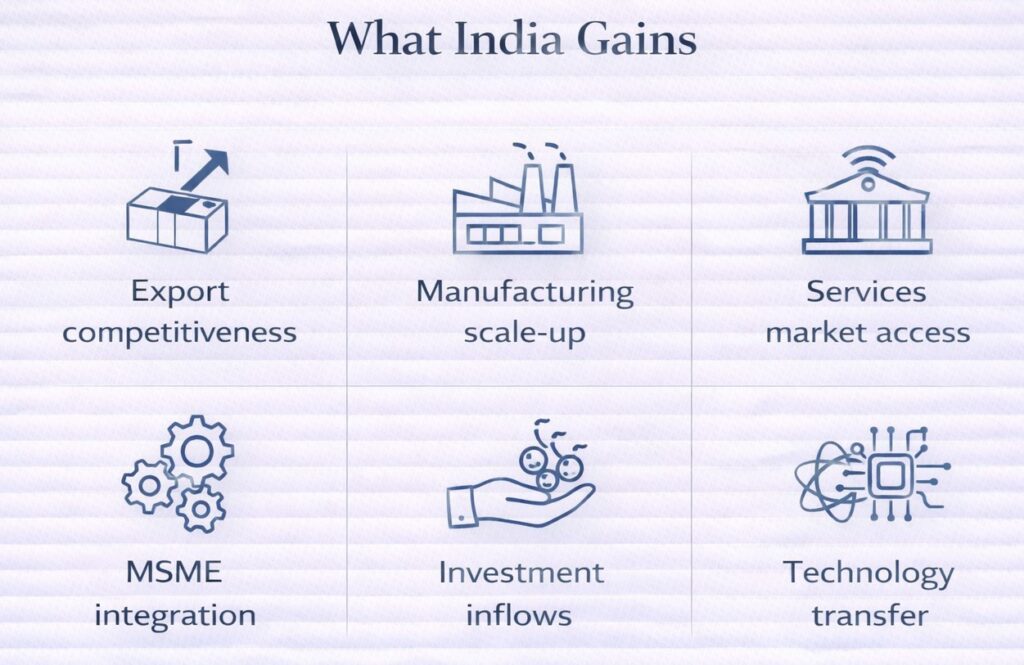
This is crucial for India’s manufacturing and employment landscape, particularly SMEs and micro-enterprises, which now gain preferential access to one of the world’s largest consumer markets.
Services Sector Expansion: India’s services sector, led by IT, business process outsourcing, and telecom, is primed for significant growth under the agreement. Market access improvements are expected to catalyse services exports, potentially boosting overall export earnings and employment opportunities.
Diversification and Resilience: The FTA helps India reduce its trade dependency on any single market and align with its broader “China+1” strategy, which seeks to diversify supply chains and build greater economic resilience. It also buffers Indian exporters from protectionist measures elsewhere, such as high tariffs now faced in the U.S. market.
Investment and Technology Transfer: With the EU being one of India’s largest sources of Foreign Direct Investment (FDI), the pact is expected to unlock further capital inflows, facilitate technology transfer, and spur innovation across sectors, including renewable energy, advanced manufacturing, and digital technologies.
India-EU Trade Deal: Benefits for the European Union (EU)
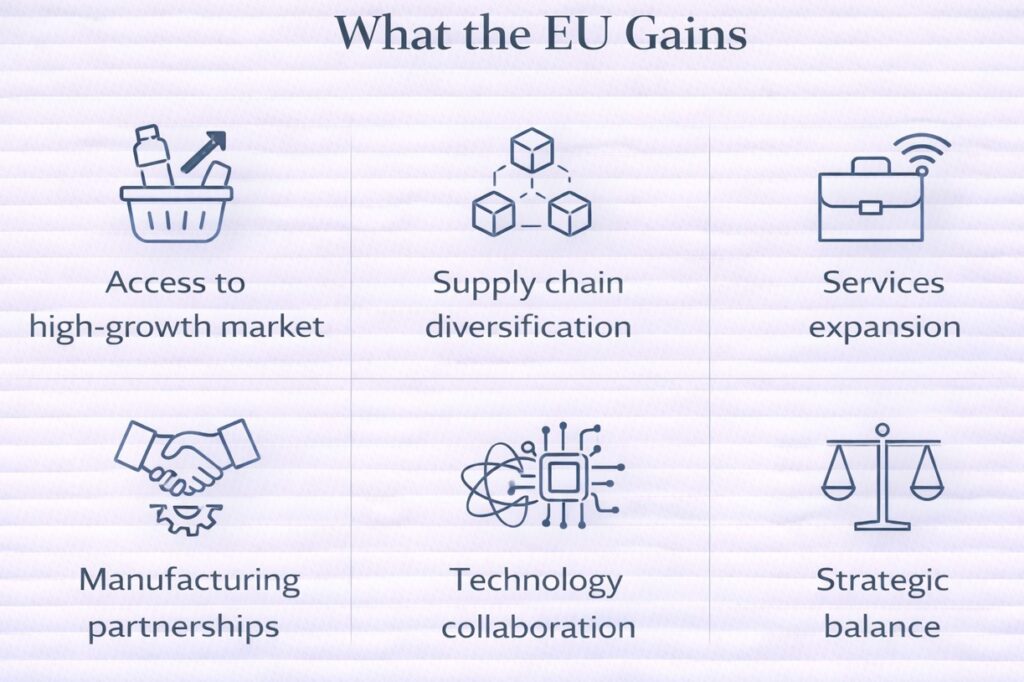
For the EU, this deal offers an opportunity to strengthen economic ties with one of the most dynamic emerging markets.
Market Access for High-Value Goods: European industries stand to gain enhanced access to Indian markets in sectors such as aviation, automotive components, machinery, chemicals, and pharmaceuticals, areas where EU producers are globally competitive but previously faced high tariffs.
Services and Professional Expertise: Professional services, intellectual property services, and digital services are expected to see expanded growth in India, providing new opportunities for EU firms and boosting bilateral investment.
Strategic Diversification: The agreement supports the EU’s broader strategy to “de-risk” from overdependence on specific global partners and enhance ties with stable, high-growth regions. Deepening trade with India aligns with the strategic goals of economic balance and supply chain resilience.
The signing of the India-EU Free Trade Agreement marks not just a diplomatic achievement but a turning point in the architecture of global trade. For India, it represents a gateway to new markets and economic opportunities; for the EU, it offers access to a dynamic and fast-growing partner. For the world, it is a reaffirmation that nations can choose cooperation over fragmentation.
As the pact enters the implementation phase, businesses, workers, and policymakers on both sides have much to gain, and a shared responsibility to ensure that the benefits of this historic agreement are broadly and equitably realised.
India–EU Trade Agreement: A Game-Changer for Manufacturers, IT Firms and MSMEs
Operating at the intersection of manufacturing, technology, and global trade, the India–European Union Free Trade Agreement is not merely seen as a diplomatic milestone but as a once-in-a-generation opportunity for the Indian industry.
For years, Indian companies, especially manufacturers, IT service providers, and MSMEs, have emphasised accessing the global markets. With the India-EU trade agreement now signed, that aspiration moves decisively closer to reality. This deal has the potential to reshape how Indian enterprises integrate with global value chains, compete internationally, and scale sustainably.
Manufacturing – From Cost Advantage to Capability Leadership
Indian manufacturing has long been competitive on cost, but access to premium markets like the EU has often been constrained by high tariffs, regulatory complexity, and standards compliance. The trade agreement changes that equation.
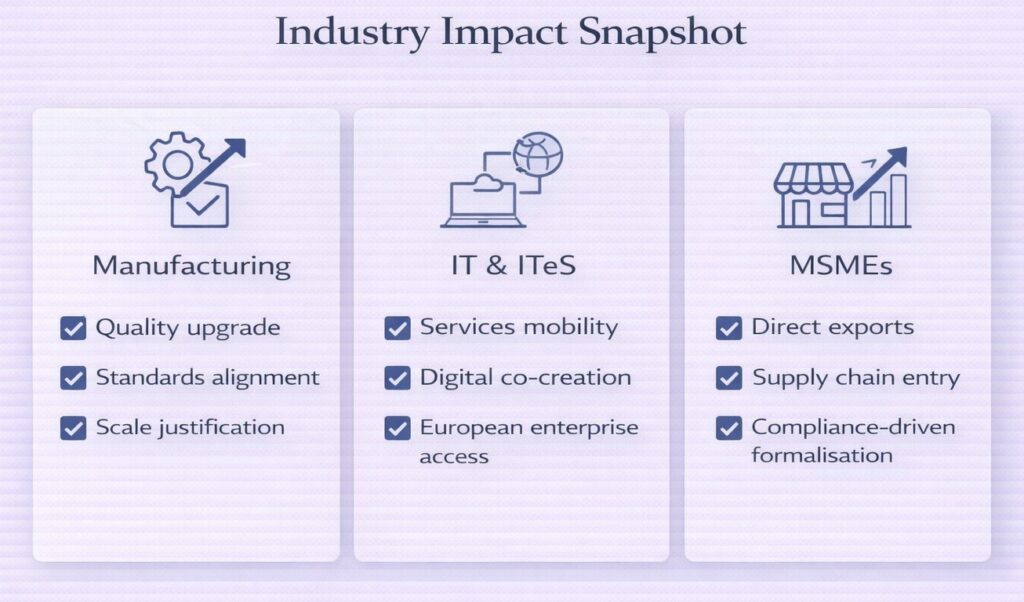
For manufacturers in engineering goods, auto components, electronics, textiles, pharmaceuticals, and industrial equipment, reduced tariffs and regulatory harmonisation mean predictable access to one of the world’s most sophisticated consumer markets. More importantly, it incentivises Indian manufacturers to upgrade quality, adopt global best practices, and move up the value chain.
This is critical. Manufacturing competitiveness in the next decade will not be driven by cost alone, but by precision, sustainability, traceability, and innovation. The EU agreement effectively nudges Indian industry toward this future, and that is a positive disruption.
For companies aligned with the government’s “Make in India” and “Production-Linked Incentive (PLI)” initiatives, the EU market can become a powerful demand engine that justifies scale, automation, and long-term capital investment.
IT and ITeS – India’s Silent Strategic Advantage
While much attention is given to goods trade, the real strategic advantage for India lies in services, particularly IT, digital transformation, engineering services, and business consulting.
The agreement’s emphasis on services liberalisation, professional mobility, and regulatory cooperation creates new headroom for Indian IT and technology firms to deepen their presence in Europe. As European enterprises accelerate digitalisation, cybersecurity, AI adoption, and cloud migration, India’s technology ecosystem is uniquely positioned to partner, not just supply.
This is a shift from transactional outsourcing to co-creation. Indian IT firms are no longer just vendors; they are strategic partners in Europe’s digital journey. The trade agreement provides the policy certainty required to scale this partnership.
For mid-sized IT firms and niche technology players, this opens doors that were previously accessible only to large multinationals.
MSMEs
Perhaps the most transformative impact of the India–EU trade agreement will be felt by India’s MSME sector, provided the ecosystem supports them effectively.
MSMEs form the backbone of India’s manufacturing and services economy, yet they often lack access to global markets due to compliance costs, information asymmetry, and limited financing. The EU agreement, by lowering trade barriers and improving transparency, creates a real opportunity for MSMEs to become direct exporters and global suppliers.
Beyond Exports – Investment, Technology and Trust
The significance of this agreement goes beyond exports. The EU is already a major source of foreign direct investment into India, and the trade pact strengthens investor confidence.
European companies looking to diversify supply chains will increasingly see India as a long-term manufacturing and innovation base. This means technology transfer, joint ventures, skill development, and higher-value employment, outcomes that matter far more than short-term trade balances.
From an industry perspective, what businesses value most is predictability. Clear rules, dispute resolution mechanisms, and aligned standards reduce uncertainty and unlock long-term planning. This agreement provides exactly that.
Opportunity Favours the Prepared
The India–EU trade agreement is not just an opportunity; it is a test of readiness. Those who adapt quickly, invest wisely, and think globally will benefit disproportionately.
If leveraged well, it can accelerate India’s transition from being a cost-competitive economy to a capability-driven global partner.
Socio-Economic Impacts of the 2025 WTAs
Export Growth and Market Diversification
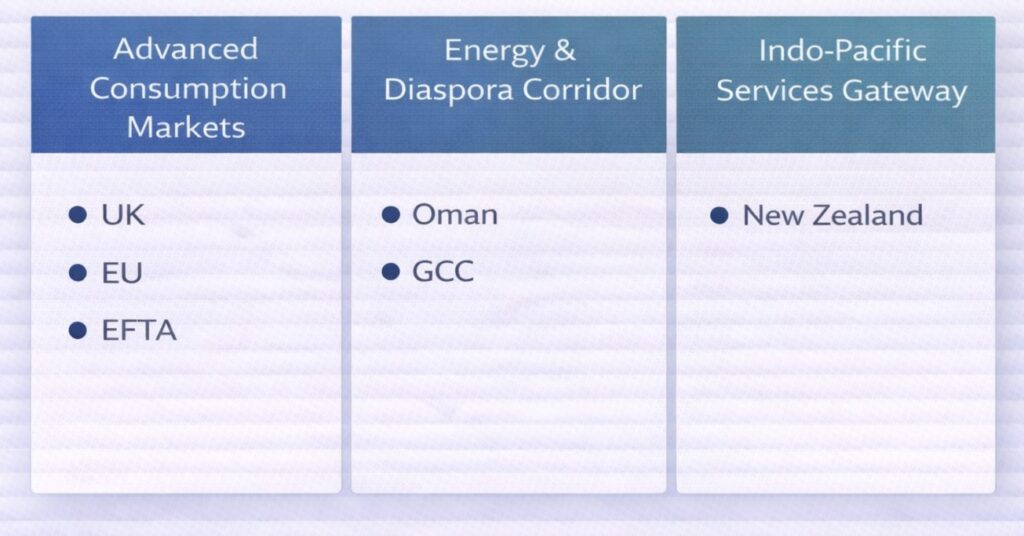
One of the most immediate effects of these agreements is the diversification of India’s export markets. Historically, India’s trade has been concentrated in a few major economies and regions. By forging ties with the UK, Oman, New Zealand, and advanced European markets via EFTA, India reduces its vulnerability to demand fluctuations in any single market.
The FTAs with Oman and the UK, in particular, are expected to help Indian exporters in labour-intensive sectors such as textiles, leather, gems and jewellery, footwear, and engineering goods by providing preferential duty-free access—a major boost for competitiveness.
In tandem, services exports—which already contribute nearly half of India’s export basket—stand to gain from enhanced market access. Sectors like IT services, healthcare, finance, and education will have smoother regulatory pathways to enter partner markets, fuelling growth in high-value services exports.
Foreign Direct Investment and Job Creation
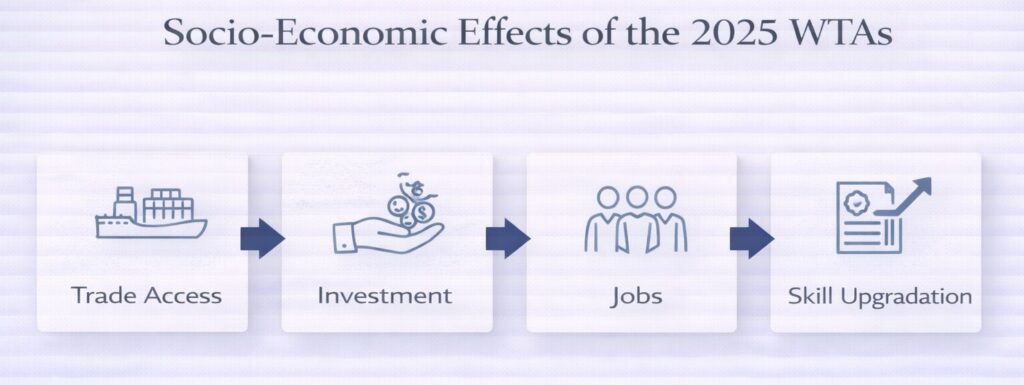
The TEPA with EFTA stands out for binding investment commitments—an unusual feature in trade pacts. The stated $100 billion investment pledge is expected to generate around one million direct jobsover the next 15 years, particularly in sectors tied to manufacturing, advanced engineering, and services.
In the near term, such commitments can bolster confidence among Indian and foreign investors. They signal stable, predictable market access and regulatory environments, which are critical to long-term capital deployment decisions. This could trigger new manufacturing capacities, technology transfer, and upskilling of the Indian workforce across multiple industries.
Enhanced Competitiveness and MSME Integration
By lowering tariffs and aligning regulatory frameworks with global norms, these FTAs create opportunities for smaller Indian firms, particularly Micro, Small, and Medium Enterprises (MSMEs), to integrate into international supply chains. Access to duty-free markets can catalyse export-oriented production clusters in regions beyond traditional manufacturing hubs, stimulating inclusive growth across India’s hinterlands.
This could be particularly significant for states seeking new avenues for industrialisation and employment. Sectors such as leather products, handicrafts, agro-processing, and specialised engineering goods could see expanded export orders and increased participation in global value chains.
Services Sector Expansion and Skilled Mobility
The inclusion of provisions for service mobility—especially in the UK and New Zealand pacts—will bolster India’s already thriving services exports. Indian professionals in IT, healthcare, accounting, finance, and educationwill enjoy easier mobility, enhancing cross-border service delivery and collaboration.
This also helps address the “brain circulation” phenomenon, encouraging skilled Indian workers to gain global experience while maintaining strong ties to the domestic economy.
Structural Challenges: Trade Deficits and Regulatory Hurdles
Despite these positives, analysts caution against over-optimism. Recent reports indicate that India’s trade deficit with its FTA partners expanded in parts of 2025, pointing to structural imbalances where imports have tended to grow faster than exports under liberalised terms.
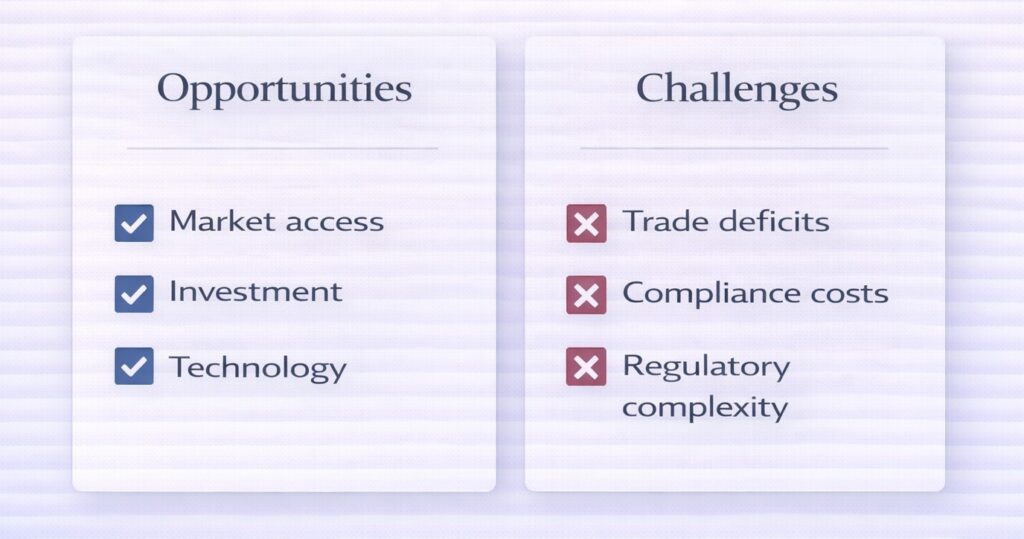
Trade with the United States remains a significant challenge, as steep tariffs on key Indian exports continue to constrain access to the world’s largest consumer market. Without a breakthrough agreement with the US, India risks missing out on the most lucrative export opportunities for labour-intensive and high-value goods. But, in the given scenario, it looks vague, ambiguous and clumsy.
Moreover, compliance with stringent regulatory frameworks in advanced markets, in areas like environmental standards, intellectual property, and data protection, poses challenges for Indian firms. Successfully navigating these hurdles will require sustained investment in quality infrastructure, certification regimes, and compliance capabilities.
Geo-Political Implications
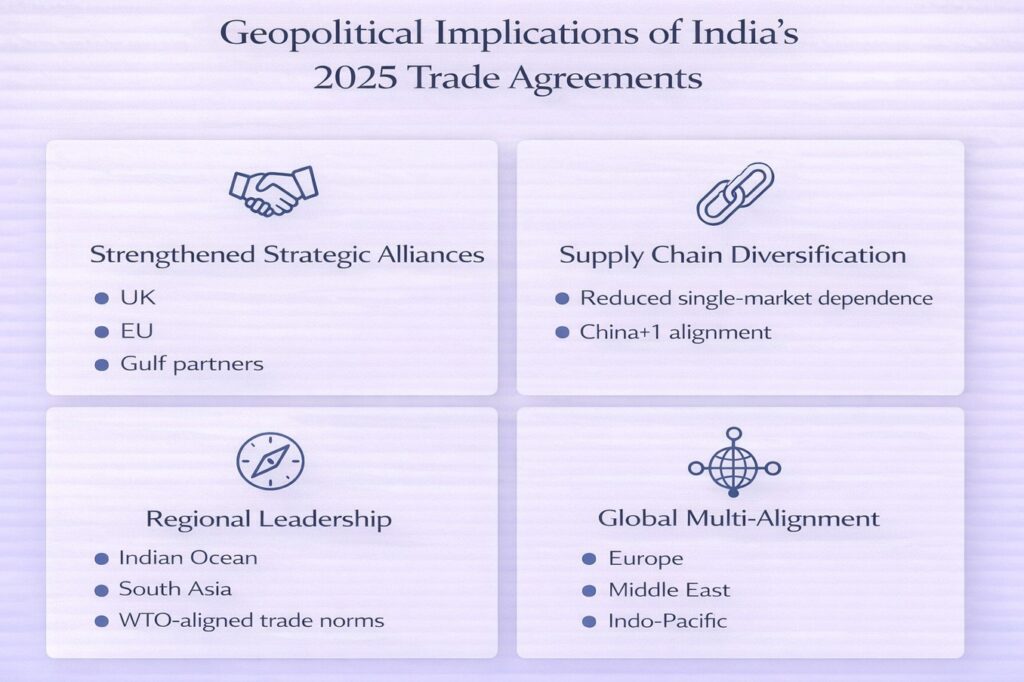
Strengthening Strategic Alliances
Trade agreements are rarely just economic instruments; they are powerful levers of foreign policy. The 2025 WTAs deepen India’s strategic engagement with partners that matter not just economically but also politically.
The CEPA with Oman, for example, strengthens India’s presence in the Gulf—a region central to India’s energy security, diaspora relations, and geopolitical interests. By diversifying beyond reliance on a few Gulf players and embedding deeper economic ties with Oman, India promotes a more balanced engagement in West Asia.
Similarly, the UK pact not only cements historic ties but aligns India more closely with the Anglosphere’s economic architecture, enhancing cooperation in innovation, defence technology, and standards setting.
Counterbalancing Global Economic Powerhouses
With China’s expansive Belt and Road footprint and the United States’ protectionist tariff policies, India’s 2025 trade diplomacy reflects a nuanced strategy of economic multi-alignment.
By sealing high-quality agreements with Europe (via EFTA), the UK, and advanced economies like New Zealand and India mitigates dependence on any single global power. It positions itself as a pivotal link between Western markets, the Middle East, and the Indo-Pacific region.
This diversification also helps counterbalance China’s dominance in regional manufacturing and supply chains. It reassures partners that India is a reliable source of diversified, high-growth markets and can be an alternative partner for investment and trade in critical sectors.
Regional Leadership and Development Agenda
India’s proactive trade strategy enhances its role as a regional leader in South Asia and the broader Indian Ocean region. The WTO-aligned agreements fill a leadership vacuum by promoting open markets, stable rules, and cooperation at a time when multilateral trading systems are under strain.
These pacts also demonstrate India’s commitment to global economic integration and reforms, an important narrative in forums such as the G20, BRICS, and the WTO itself.
Policy Imperatives for Maximising WTA Benefits
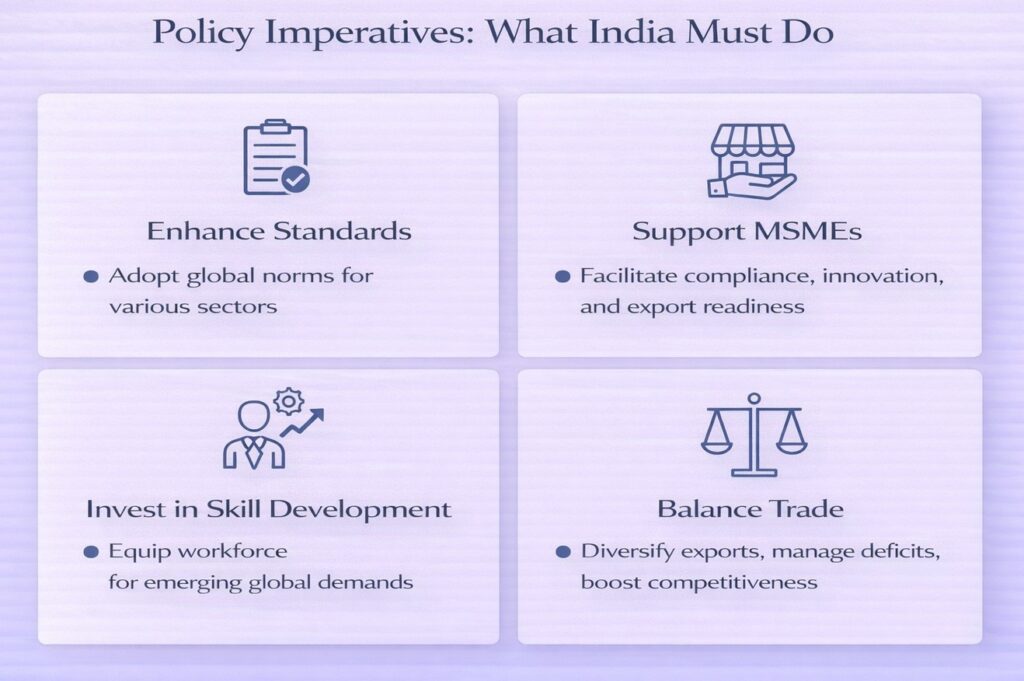
To fully capitalise on these agreements, India must adopt complementary policy measures:
- Strengthen Export Infrastructure: Upgrading ports, logistics, and certification capacities to reduce time and cost.
- Promote MSME Integration: Targeted support to help smaller firms meet global standards and market access.
- Skills Development: Align workforce training with global service and manufacturing demand.
- Regulatory Harmonisation: Adopt high-quality standards in environment, labour, and digital trade to reduce non-tariff barriers.
- Negotiate Strategic FTAs: Prioritise deals with the United States and ASEAN to open the largest export markets.
Conclusion: A Pivotal Year in India’s Trade Evolution
The WTAs that India signed or operationalised in 2025 mark a strategic pivot in its trade diplomacy, one driven by diversification, competitiveness, and a nuanced understanding of global power shifts. While challenges remain, especially in balancing trade deficits and navigating advanced regulatory regimes, the overall architecture of these agreements offers a durable platform for growth.
If coupled with smart domestic reforms, these pacts could transform India from a regional economic power into a global trading heavyweight, catalysing socio-economic development while anchoring India’s role as a geo-economic stabiliser in an unsettled world.
As India moves into 2026, the priority will be to translate these trade commitments into measurable gains: stronger exports, higher investment flows, and deeper integration with global value chains. In doing so, India can realise the dual promise of prosperity at home and influence on the world stage.